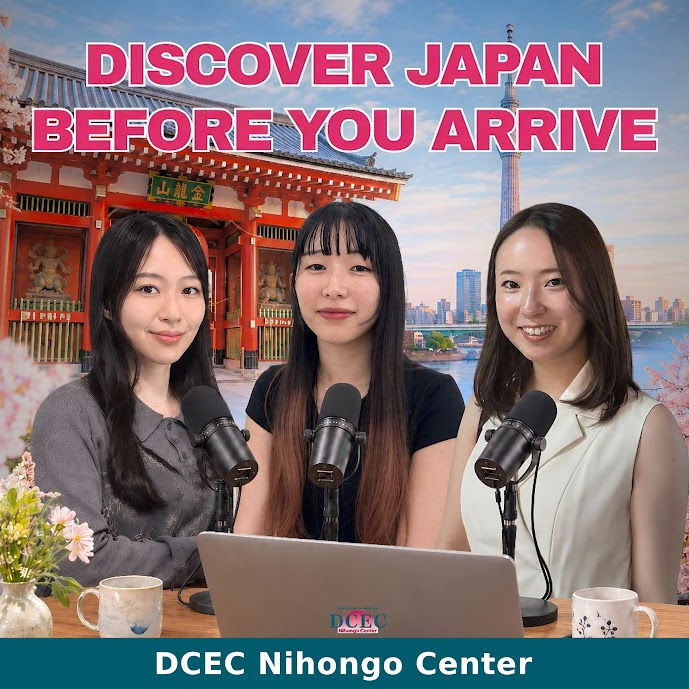
Discover Japan Before You Arrive エピソード4
更新日:1 時間前

427エピソードを配信した「Jeni No Pika Pika Nihongo」から、新しいPodcastへ!
皆さん、こんにちは!DCECのHinataです。
以前からメルマガでも進捗をお伝えしてきたNihongo CenterのPodcastですが、今週、Episode 4が配信されました!
今回は、Mikiのエピソードです。 Spotifyからお聴きいただけますので、ぜひ興味のある方はチェックしてみてください!
エピソードのリンク
Episode 4お母さんの弁当はこちら
Ep.04 いただきます ── 母が作った弁当 — Discover Japan Before You Arrive
毎朝、母はお弁当を3つ作っていました。私と、妹2人の分。一日が始まる前に、3つ。
ミキがまず案内するのは、日本のコンビニのお弁当です。宝箱のように並んだお弁当。
ごはん、野菜、卵焼き、からあげ。そして、小さいタコ。タコではありません。
ソーセージをタコの形に切った「たこさんウィンナー」です。
そのあとに話すのは、お店で買ったお弁当ではありません。ハートの卵焼き。
にんにくの強いからあげ。学校のかばんが、その匂いになっていました。
友達が「お弁当、いつもおいしそう」と言ってくれたこと。
そして、家でけんかした翌朝も、お弁当はちゃんとそこにありました。
途中で考えること。「いただきます」は本当は何を言っているのか。
「let's eat」では足りない理由。日本人は毎食きちんと言うのか(答え:言いません)。
彼氏が、ある一言を言われるまで言い忘れる話。
そして、食べ終わったあとの言葉「ごちそうさまでした」。
二つの短い言葉。その裏に、長い物語があります。
出演:ミキ
音楽:「幸せダイアリー」BGMer — https://bgmer.net (ロイヤリティフリーBGM)
制作:DCEC Nihongo Center
著作権:(C) TESZARA Co., Ltd.
Ep.04 Itadakimasu — The Bento My Mother Made — Discover Japan Before You Arrive Every morning, my mother made three lunchboxes. One for me, two for my youngersisters. Three lunches before the day had even started.Miki takes you into a Japanese convenience store first, where lunchboxes sit inrows like little treasure chests: rice, vegetables, a rolled omelette, friedchicken, and sometimes a tiny octopus. It is not an octopus. It is a sausage cutinto an octopus shape — takosan wiener.
Then the bento that wasn't from a shop. Heart-shaped omelettes. Fried chickenwith so much garlic that her school bag smelled of it. Friends saying "yourlunch always looks delicious." And the morning after an argument at home, thebento still waiting in the bag.
Along the way: what いただきます actually means, and why "let's eat" doesn'tcover it.
Whether Japanese people really say it at every meal (short answer:no). Why her boyfriend sometimes needs one look and one question before he saysit.
And what to say when the meal is over: ごちそうさまでした.
Two short expressions. A long story behind them.Chapters0:00 Opening (music only)
1:00 Today, a story about my mother's lunchboxes
1:09 Lunchboxes like little treasure chests
1:18 お弁当 — have you ever seen one?
1:21 Rice, vegetables, chicken, a rolled omelette
1:27 And sometimes a tiny octopus
1:32 Wait, an octopus for lunch?
1:36 It's a sausage cut into an octopus shape
1:40 たこさんウィンナー
1:48 The most special bento wasn't from a shop
1:53 It came from my mother
1:56 Did anyone prepare lunch for you?
2:06 Three bento, every morning
2:19 Heart-shaped omelettes
2:26 からあげ — fried chicken
2:30 One little problem: a lot of garlic
2:37 にんにく — the smell in her school bag
2:42 Eating the chicken before lunch time
2:48 "Your lunch always looks delicious!"
3:02 A smell that brings back a memory
3:12 The part I still remember
3:26 The next morning, the bento was still there
3:37 At the time, I didn't see the work behind it
3:48 Someone showed you love through food
3:53 Who comes to mind?3:56 Your first meal in Japan: いただきます
4:02 "Often translated as let's eat"
4:06 But that misses something important
4:09 Gratitude for the plants and animals4:15 And for the people who grow and cook it
4:19 Does everyone think that at every meal?
4:24 Of course not4:31 People have different habits
4:42 Not a perfect ritual — the feeling behind it
4:48 Another little secret
4:55 My boyfriend sometimes forgets
5:01 何か言うことはあるよね?
5:07 Don't worry about doing it perfectly
5:24 After the meal: ごちそうさまでした
5:38 Thanking someone for the meal
5:46 Would you like to try it?
5:54 Not every family does the same
6:01 Picture your first meal in Japan
6:11 Say quietly: いただきます6:21 Two short expressions
6:33 When I hear it, I think of my mother
6:50 Who would you like to thank today?7:04 Thank you, Mom!
7:06 Discover Japan before you arrive
7:12 See you next time
7:26 Music to the end
Host: MikiMusic: "Shiawase Diary" by BGMer
— https://bgmer.net (royalty-free BGM)
Production: DCEC Nihongo CenterCopyright (C) TESZARA Co., Ltd.


コメント